Leak investigation and targeted repairs
Trace moisture to the source using roof-surface checks, penetrations, edge details, and interior clues, then complete repairs that address the failure point—not only the stain.
Serving Grand Rapids, Michigan & surrounding areas
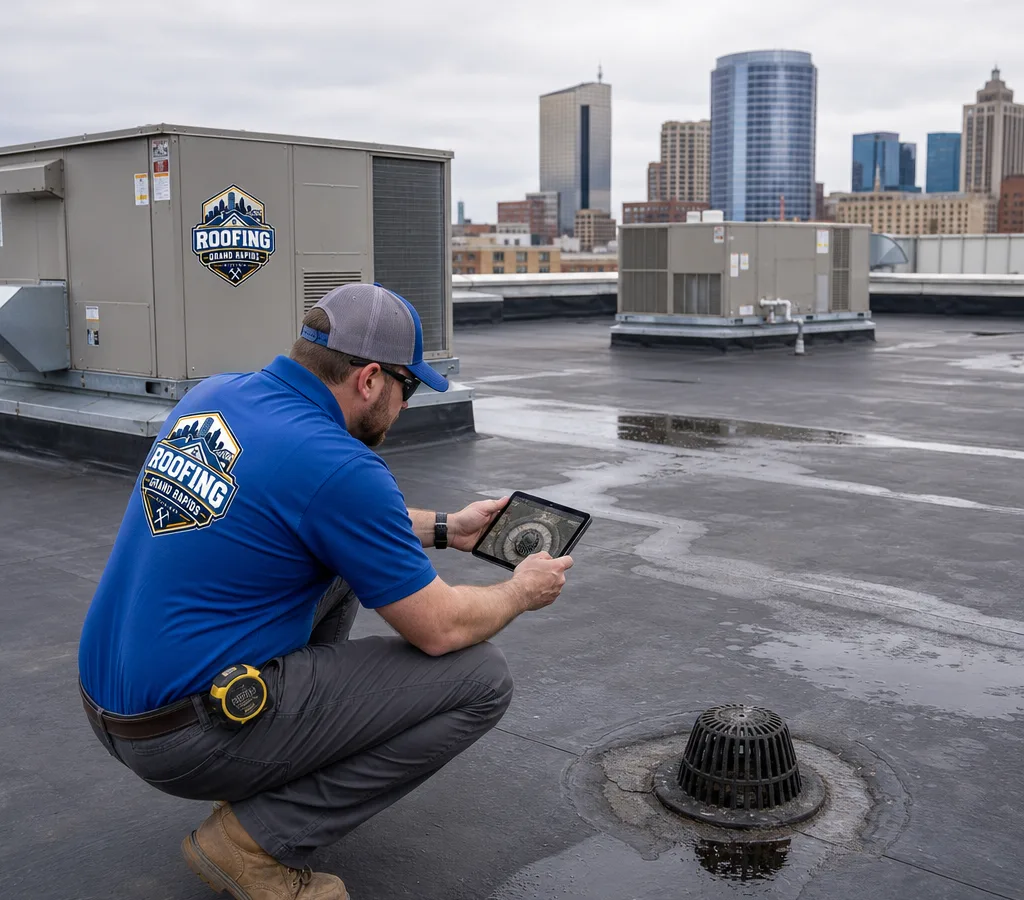
Protect your building with a roof plan built for West Michigan weather: clear options, a written scope, and workmanship that holds up on busy properties.
If you are searching for commercial roofing Grand Rapids property owners can rely on, you likely need answers fast: what is failing, how urgent it is, and what a repair or replacement actually includes. Roofing Grand Rapids helps facility managers, owners, and property teams plan roofing work with minimal disruption to tenants and operations.
Commercial roofs in Grand Rapids take a beating. Freeze-thaw cycles stress seams and flashings, spring storms test edges and drains, and summer heat bakes membranes and coatings. The right fix depends on the roof type, the existing assembly, drainage behavior, rooftop traffic, and what is under the roof—offices, inventory, equipment, or tenants. We start with an inspection that looks for water entry points and root causes, not just surface symptoms.
For a broader view of our work across the area, Grand Rapids roofing covers the full range we handle across residential and commercial properties.
Trace moisture to the source using roof-surface checks, penetrations, edge details, and interior clues, then complete repairs that address the failure point—not only the stain.
Clear debris at drains and scuppers, reseal small problem areas, and document conditions so small issues do not turn into interior damage.
Remove and replace when the existing system is at the end of service life or repairs are no longer cost-effective. Scope is based on the existing assembly, insulation needs, and drainage.
Temporary dry-in and permanent repairs after severe weather, with photos and documentation that help with your insurance process.
Watertight details around curbs, vents, skylights, and wall transitions, including rework around new rooftop equipment when needed.
Evaluate whether a coating or restoration approach is viable for the roof type and condition, then prep properly so the system adheres and performs as intended.
Commercial roofing decisions usually come down to risk and disruption: keeping the building dry, protecting people and equipment, and scheduling around the workday. Our process is built for real facilities, not empty buildings.
First, we review the roof layout—sections, parapets, drains, and scuppers—along with HVAC units, vents, skylights, and any areas with ongoing foot traffic. Next, we identify the likely water pathways. Many leaks show up far from the opening because water travels along deck ribs, insulation joints, or structural members.
We then provide a written scope that spells out what is included: what gets removed, what gets repaired, what gets replaced, how transitions are handled, and how we protect the site during work. That clarity matters when you are coordinating vendors, tenants, and budgets.
In Grand Rapids, low-slope roofs often fail at details: aging pipe boots, open seams, damaged termination bars, and clogged drainage that leads to ponding. Fixing details correctly is usually what stabilizes the roof and stops repeat leaks.
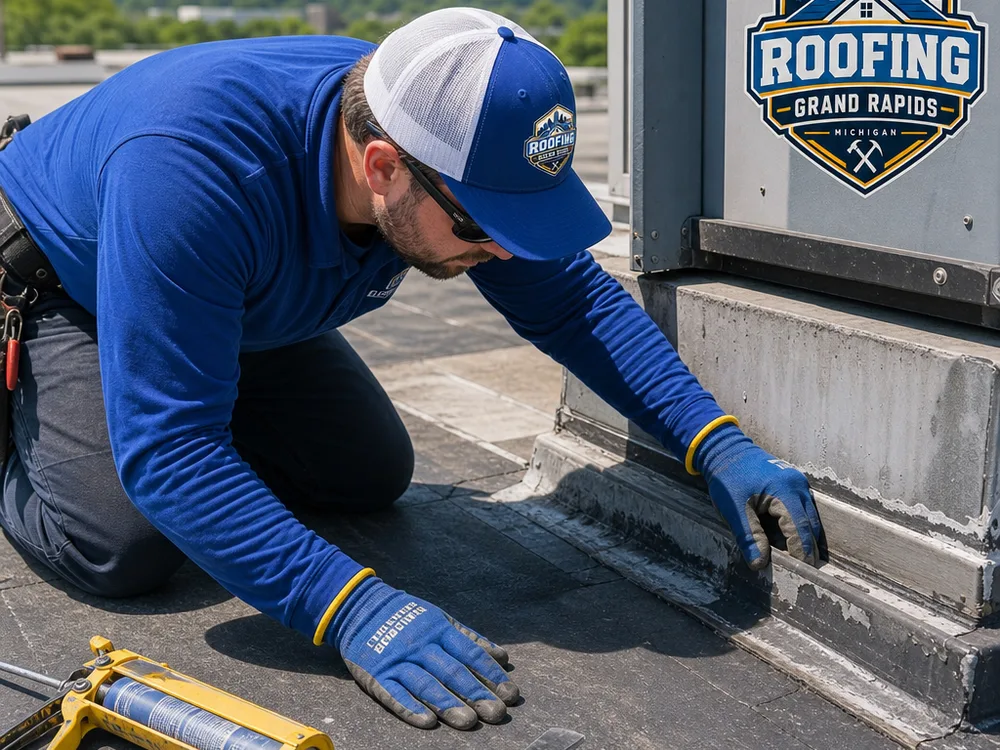
We walk the roof, review interior leak indicators if present, and note safety and access needs, including hatches, ladders, lift requirements, parking, and staging.
You get a clear explanation of what we found and which paths make sense: repair, restoration, or replacement. If there are tradeoffs, we spell them out in plain terms.
We outline materials, preparation, details at edges and penetrations, debris handling, and how the work will be sequenced to reduce disruption.
We coordinate timing around operating hours when possible, keep walkways and entrances safe, and communicate daily progress with your point of contact.
We review completed work, share photos where helpful, and confirm any maintenance recommendations so you have a plan going forward.
Most Grand Rapids commercial roofing projects typically range from about $8 to $18 per square foot for replacement, while many leak repairs land around $350 to $1,500+, depending on access and the repair scope. Coatings or restoration, when eligible, often fall between full repair and full replacement.
Your final price depends on roof size and height, tear-off needs, insulation and drainage corrections, perimeter edge metal, penetrations and HVAC curbs, and how many roof sections must be detailed. Exact pricing is confirmed after an on-site inspection and written scope.
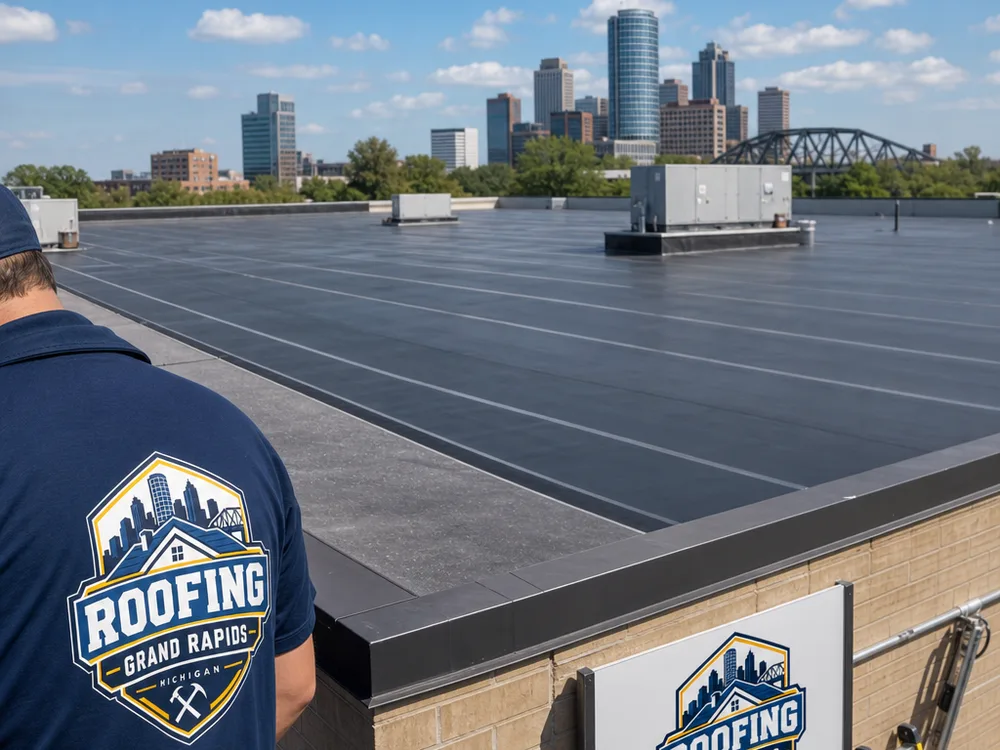
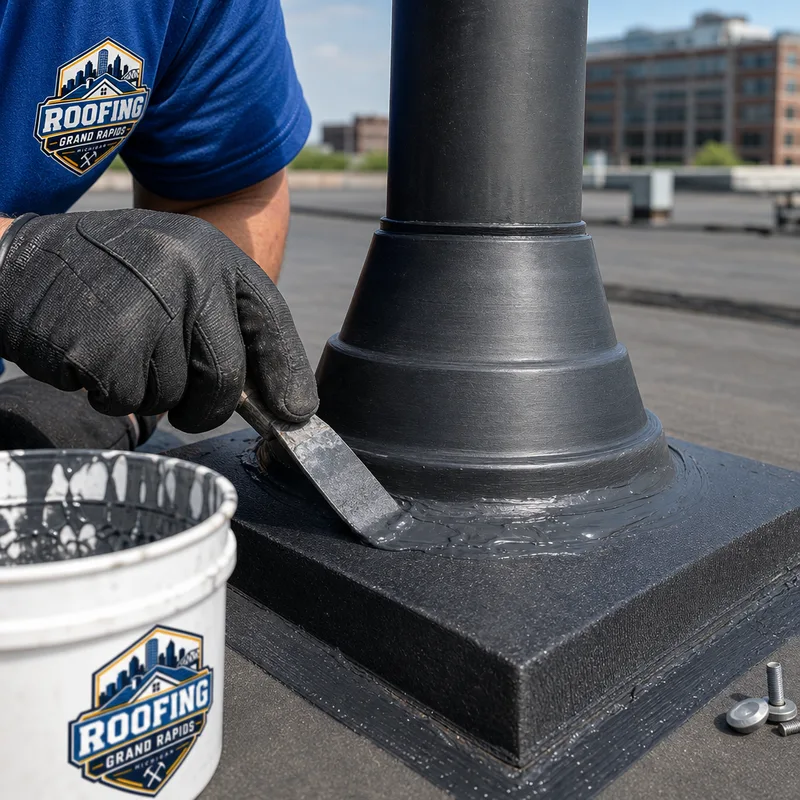
We start by identifying the most likely entry points—penetrations, seams, edges, and drains—then confirm pathways using roof-surface inspection and interior indicators such as staining patterns and wet insulation locations. On low-slope roofs, water often travels before it shows inside, so the visible drip is not necessarily the source. We document findings with photos and recommend a repair that addresses the failure point, such as seam repair, flashing replacement, or drainage correction.
Repair makes sense when the membrane or surface is broadly sound and failures are isolated to details such as flashings, seams, or a small damaged area. Replacement is usually the better plan when leaks recur in multiple areas, the system is brittle or saturated, or past patches have created weak transitions that keep reopening in West Michigan freeze-thaw conditions. After inspection, we lay out the options with a written scope so you can compare risk, downtime, and expected service life.
Many small to mid-size commercial roof replacements take several days to a couple of weeks, but the schedule depends on square footage, the number of roof sections, tear-off complexity, and weather. Grand Rapids can see fast-changing conditions in spring and fall, so we plan sequencing and dry-in steps to keep the building protected at the end of each workday. You will get a realistic timeline in the proposal once the roof layout and access are confirmed.
Yes, commercial roofing is often done on occupied buildings, and we plan staging, access routes, and noisy tasks with operations in mind. We coordinate material placement, protect entrances and walkways, and communicate what to expect so tenants and staff are not surprised. If your property has delivery windows, special parking rules, or sensitive areas under the roof, such as IT rooms, we build those constraints into the plan.
The most common problem areas are penetrations such as HVAC curbs, vents, and skylights; perimeter edges; seam transitions; and drainage points such as roof drains and scuppers. In Grand Rapids, clogged drainage and ponding can accelerate deterioration, and winter conditions can stress already-weak seams and flashings. A good inspection spends as much time on details as it does on the open roof field.
Yes, we can provide photos, notes on observed damage, and a clear written scope so you have straightforward documentation for your claim. We can also perform temporary dry-in work when needed to protect interiors while the claim is being processed. The right next step is an inspection soon after the event so conditions are recorded before temporary measures or additional weather changes the evidence.
Tell us what you are seeing, what type of building you manage, and any access constraints. We will inspect the roof, explain the findings, and provide a written scope you can use to schedule the work with confidence.